
War
What's it good for?

War, what is it good for? Check out the original recording at
and then the read the post.
Below are four articles that summarize the answer to the question in no uncertain terms, beginning with who it is actually good for and then who pays the price. The first article addresses how oil companies will generate an extra $5bn cash flow this month alone as a direct result of the US war on Iran. Who will pay that price? Not hard to figure that out if you’ve had to purchase gas or gone to the grocery store lately.
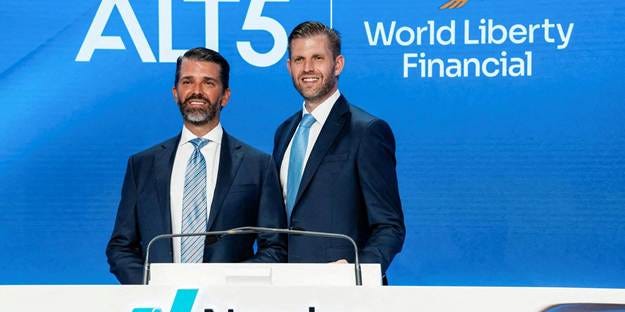
The second article focuses on a couple of specific individuals who will reap the rewards. Surprise, surprise; among the big winners are none other than Trump’s sons. To call the Trump administration a criminal kleptocracy is a gross understatement.
The third article vividly describes the environmental consequences of the US war and attacks on Iranian oil facilities. The US military already contributes more climate warming gases than any but a few nations and is now ramping up its war on the environment at the same time as it makes war on the Iranian people.
Finally, in article #4, Corbin Trent lays out the other consequences of throwing away one trillion dollars a year on war or the preparation for war. As our country’s infrastructure, from transportation to education, from healthcare to basic industry, deteriorates, the economy becomes less and less able to meet Americans’ basic needs.
So, unless you are heavily invested in the ‘merchants of death’, the forever wars the Trump administration is eager to fight with your sons and daughters are not going to benefit you.
#1 - From Adam Tooze’s Chartbook, 3/16/2026
US oil companies stand to receive a windfall of more than $60bn this year if crude prices maintain the levels they have hit since the start of the Iran war. Modelling by investment bank Jefferies estimates American producers will generate an extra $5bn cash flow this month alone following a roughly 47 per cent rise in oil prices since the conflict began on February 28. If US oil prices remain elevated and average $100 a barrel this year, the companies will receive a $63.4bn boost from oil production, according to energy research company Rystad.
# 2 - Trump wages war, his sons get payoff through savvy investments by Stavroula Pabst, Responsible Statecraft, Mar 17, 2026
The U.S. military desperately needs drone capabilities for President Donald Trump’s war in Iran, and fast. Coincidentally, his sons Eric and Donald Trump Jr., are on the case.
Indeed, the Trump brothers are pumping money into defense-tech oriented firms that have already secured Pentagon contracts, or have already put battle-tested products to market. For example, they’ve invested in Powerus, a new drone company aiming to harness its “strong relationship with Ukraine” as a means to acquire and leverage war-tried Ukrainian drone technologies in a competitive U.S. market. Having bought out several competitors, Powerus already does business with the U.S. military.
In other words, the Trump family stands to benefit financially from the war, and already are.
Eric Trump also invests in Israeli drone firm and DoD contractor Xtend, whose “low cost-per kill” attack drones have been used by the IDF in Gaza. Expanding to the U.S., the company opened an office near Tampa last summer.
Donald Trump Jr. has a $4 million stake in, and sits on the board of Unusual Machines, a drone parts startup. In December, it secured a $620 million DoD loan — the largest loan in the history of the Pentagon’s Office of Strategic Capital — to make drone parts.
And Trump Jr. is a partner at 1789, a “patriotic capitalist” venture capital firm which backs a number of defense-tech startups. The firm, which Trump Jr. joined in November 2024 — right after his father was re-elected to the presidency — has since seen explosive growth: the assets it manages jumped in value from $150 million to more than $2 billion by the end of last year.
Suggesting the firm influences U.S. policy outright, Trump Jr. explained at a Future Investment Initiative event last year that 1789 “understand[s] what the administration wants to do, because [the firm] helped craft some of the messaging.”
Conflicts of interest percolate
As William Hartung, a Quincy Institute senior research fellow, tells RS, the Trump family’s defense-tech pursuits can be linked to a larger network of technology firms and venture capitalists that has significant influence within the Trump administration.
“The emerging military tech sector has deep ties to the administration, starting with vice-president J.D. Vance’s relationship with Palantir founder Peter Thiel, who employed Vance and helped fund his Senate run,” Hartung said. “The fact that Donald Trump Jr. — not only the president’s son but a close political advisor and unofficial spokesperson — will now profit personally from the fate of specific military tech firms adds an even more profound conflict-of-interest.”
To this end, 1789’s portfolio includes a number of defense-oriented companies, such as Anduril, Hadrian, SpaceX, and Vulcan Elements, a DOD contractor that makes rare-earth magnets, which are also backed by controversial venture capitalist Peter Thiel or his VC firm Founders Fund. A Silicon Valley kingmaker and Palantir co-founder to boot, Thiel has simultaneously worked to influence U.S. politics, bankrolling Congressional campaigns while many in his orbit now occupy major positions in the Trump administration.
Notably, Trump Jr. also sits on the advisory board of controversial prediction market Polymarket — which 1789 and Thiel’s Founders Fund also back — fostering an environment where people with insider awareness regarding the outcomes of world events could theoretically profit from that knowledge.
Hartung warns such political access — and, in the case of 1789, venture capital funding — can give certain defense-tech startups an unwarranted edge.
“Venture capital allows firms to stay in the market longer before they score their first big government contract, be it with the Pentagon, an intelligence agency, or the Department of Homeland Security,” Hartung told RS. “But once these influential firms have sunk substantial funds in a startup, they may use their influence to get that firm a contract whether or not its technology is ready for prime time, just to get a return on funds invested up to a given point in time.”
“If they can recruit the president’s son to join in boosting a particular firm, whether or not its product has been proven effective, they have a whole new level of influence, which can be wielded to serve their financial interests rather than the public interest,” Hartung said.
Jumping to profit
Leveraging powerful family ties to break into the weapons industry, Trump’s sons appear poised to profit even more as their father’s administration ramps up spending for militarized drone technologies — for the conflicts it pursues abroad, but also at home.
Xtend’s attack drones have already been deployed to Iran, under a contract for a “government defense customer in the Middle East” worth up to $25 million. As Anduril Executive Chairman Trae Stephens told Bloomberg TV earlier this month: Anduril has “all sorts of primarily counter-air systems that are present in conflict zones,” where the company is “actively working day to day” with the DOD. Anduril received a ten-year U.S. Army contract this weekend worth up to $20 billion.
Meanwhile, the Pentagon is pursuing a $1.1 billion “unleashing drone dominance” initiative, which aims to field over 200,000 American-made attack drones by 2027. Trump brothers-backed companies have actively pursued that funding: Xtend was among 25 companies invited to participate in the program’s first competition rounds for some of that funding, although it did not advance.
Beyond the battlefield, law enforcement and border security agencies are increasingly adopting war-tested, dual-use drone technologies — which could create further opportunities for drone-sector defense contractors the Trump siblings bankroll. As RS has highlighted, the Department of Homeland Security (DHS) has put forth hundreds of millions toward procuring drone and counter-drone technologies to secure the upcoming World Cup from the threat of unauthorized drones or cyberattacks.
Par for the military industrial complex course
As experts tell RS, the potential conflicts of interest on display in the Trump brothers’ defense ventures are par for the course in Washington, where such entanglements have long defined the relationship between government and the weapons industry — and altogether drive prospects for conflict.
“The revolving door between corporations and government has been undermining democracy and accountability in the U.S. for generations. This helps explain why the U.S. is always at war: no one gets rich when the U.S. doesn’t sell weapons, or doesn’t launch an invasion, or doesn’t bomb civilians,” Shana Marshall, a non-resident fellow at the Quincy Institute, told RS. “But there’s a massive network of lobbyists, think tank ‘experts,’ strategic consultants, corporate executives, asset managers and investors who get very rich when these things do happen.”
The Trump brothers’ “extreme graft is only possible because the more subtle profiteering in every preceding administration went unpunished too,” Marshall said.
#3 - From Common Dreams, by Jon Queally, 3/8/2026
‘Intentional Chemical Warfare’: Toxic Black Rain in Tehran After US-Israel Bomb Oil Facilities
“The consequences of this environmental and humanitarian catastrophe will not be confined within Iran’s borders. These strikes constitute war crimes,” said a spokesperson for the Iranian Foreign Ministry.
In the wake of infernos unleashed across portions of Tehran the night before, the people of Iran’s capital woke up Sunday to the hideous sight of ominous gray clouds above, choking-levels of smoke, and black raindrops full of toxic oil falling across the city.
Critics described “scenes of Armageddon” and characterized the bombings and the destruction they triggered as the latest crimes committed by the US and Israel since they launched their unprovoked and illegal assault on the Middle East nation last week.

Iranian officials urged residents to stay in doors to avoid the health impacts of the air quality following Israel’s intentional bombing of several oil storage and processing facilities in the city on Saturday.
“On top of everything else, Israel and the US have unleashed an environmental disaster in Tehran,” said Assal Rad, a fellow at the Arab Center in Washington, DC. “How many ways can they show you they have no regard for human life?”
Iran’s Red Crescent Society warned that the toxic rainfall in Tehran, home to approximately 10 million people, could be “highly dangerous and acidic” and issued exposure guidelines for residents.
Esmaeil Baqaei, a spokesperson for the Iranian Foriegn Ministry, condemned the attacks and resulting damage in stark terms.
“The US-Israeli criminal war against the Iranian nation has entered a dangerous new phase with deliberate strikes on Iran’s energy infrastructure,” said Bagaei in an online statement. “These attacks on fuel storage facilities amount to nothing less than intentional chemical warfare against the Iranian citizens.”
“By targeting fuel depots, the aggressors are releasing hazardous materials and toxic substances into the air, poisoning civilians, devastating the environment, and endangering lives on a massive scale,” he continued. “The consequences of this environmental and humanitarian catastrophe will not be confined within Iran’s borders. These strikes constitute war crimes, crimes against humanity, and genocide—all at once.”
In a Sunday morning video, CNN correspondent Frederik Pleitgen showed the view from central Tehran, including the black water gathering on every surface:
Pleitgen also traveled to the Shahran oil depot, among the facilities bombed Saturday, where dark gray smoke continued to billow into the air and he described the amount of damage as “immense”:
“Though it is day, the sun cannot be seen in Tehran today because of all the smoke following the US and Israel bombing Tehran’s oil refineries,” said Trita Parsi, executive vice president for the Quincy Institute, a US-based foreign policy think tank. “People on the ground describe it as armageddon.”
Parsi, who is of Iranian descent, also took aim at members of the Iranian diaspora who for weeks and months have pushed for the US and Israeli governments to attack their own country.
“History,” he said, “will not forgive Reza Pahlavi, Masih Alinejad, Nazanin Boniadi, and all other ‘leaders’ who tricked Iranians into thinking this war would set them free.”

#4 - From Corbin Trent and America’s Undoing, Mar 5, 2026
The War We’re Not Fighting
There is a fight that would make us safer and more secure. But we refuse to wage it.
This president and too many in the Democratic Party just decided to go to war with Iran. They decided it was worth the risk of a regional war and American deaths because they cannot imagine any other way to remain relevant on the global stage. They can’t picture an America that competes through what it builds. They can only picture one that competes through what it destroys.
We didn’t go to war because we had to. We went to war because it’s the only thing we know how to do anymore.
And it’s not just me saying that. The Washington Times reported that China experts are calling the Iran strikes “an operational component of a grand strategy to contain China.” The Atlantic Council said any analysis of this war that ignores the great-power competition underlying it “is either incomplete or a deliberate red herring.” First Venezuela, now Iran. Both countries that sell oil to China. Both countries whose leaders we removed in the span of two months. The pattern is not subtle.
The Carnegie Endowment pointed out that China’s entire strategy for competing with the United States has been to lean into economics, technology, construction, and training. Not military alliances. Not bombs. They build roads, ports, rail networks, energy systems. They invest in other countries’ infrastructure. They compete by making things. We compete by breaking things. And we’ve spent decades proving it.
We can’t build a subway line in under twenty years. We can’t make insulin affordable. We can’t keep a hospital open in a rural county. We can’t build housing fast enough to keep families off the street. But we can flatten a city on the other side of the world in a weekend. We’re really good at that part. We’ve had a lot of practice.
The United States of America in 2026 is a country that has completely lost the ability to build, to produce, to create, to maintain the systems that keep a society alive. And because we can’t do any of that, because we’ve emptied ourselves out so completely that the only functional institution left is the military, war is the only card we have to play. We can’t compete economically so we compete with bombs. We can’t build our way to relevance so we bomb our competition or their allies. We can’t imagine a future where American power comes from what we make and what we offer the world so instead we make sure the world is afraid of us.
That’s what the Iran war is. It’s not about nuclear weapons. It’s not about defending Israel. It’s not about democracy or human rights or any of the words they use to dress it up. It’s about a country that has nothing left to offer except force. A country that has strip-mined its own middle class, gutted its own infrastructure, sold off its own public goods, and has only war left as a way to continued relevance. There are alternatives but thry require doing the hard work of actually rebuilding. And nobody in charge, in either party, can imagine doing that work.
I wrote Tuesday about why Democrats can’t oppose this war. The short version is they agree with it. But the deeper version is this. They can’t oppose the war because they can’t articulate what we’d do instead. They have no vision for an America that doesn’t need to project military force everywhere all the time to remain a global power. They have no plan for rebuilding the domestic economy in a way that would make the war machine unnecessary. They’re stuck in the same trap as the Republicans. The only difference is they feel bad about it.
For fifty years, both parties have agreed on the big things. Hand economic power to Wall Street. Let corporations run the show. Shrink the government until it can’t do anything except write checks to defense contractors and bail out banks. They told us markets would solve everything. That prosperity would trickle down. That if we just got out of the way, corporations would build the future for us.
That experiment failed. And we’re living in the wreckage.
Since 1970, median income has gone up about 911 percent. Sounds great until you look at what happened to everything you need to buy with it. Housing prices jumped nearly 1,700 percent. Rent went up more than 1,200 percent. A public college degree that used to cost around $1,500 now runs nearly $40,000. That’s a 2,400 percent increase. And healthcare exploded by more than 4,000 percent.
People aren’t mad about eggs. They’re mad because the entire economy has been reengineered to make them work harder and get less. A society that once promised stability and upward mobility now demands more and gives back less. And when people look around for someone to blame, the only answer they’re offered is immigrants, or China, or Iran. Never the people who actually did this to them. Never the system itself.
This is why Trump won twice. Not because he had better ideas. Not because of trans people or immigrants. Because he was willing to say the system is broken. Democrats still won’t say that. They still think the system is basically fine, it just needs better management. A few more guardrails. A tax credit here, a job training program there. They cannot bring themselves to admit that the thing they’ve been building for half a century doesn’t work. That it was never going to work. That handing the entire economy to the private sector was always going to end with a country that can’t do anything except make war.
Because that’s where we are. We can’t build. We’ve forgotten how.
We built the Hoover Dam in five years. The Interstate Highway System, 41,000 miles, in thirty five years. The TVA electrified an entire region of the country that the private sector had written off. We created public universities that cost a few weeks of wages. We built Medicare in eleven months. We sent people to the moon in less than a decade.
Now it takes fourteen years to rebuild a single rail tunnel under the Hudson River, at a cost of $16 billion. California’s been working on high speed rail for over fifteen years, it’s billions over budget, and it’s still not done. China built 22,000 miles of high speed rail in fifteen years. We can’t build a system because we no longer believe we should have one. And while we pour resources into flattening Iran, Chatham House reports that Beijing sees our overextension in the Gulf as serving their interests. Every dollar we spend managing a war in the Middle East is a dollar we don’t spend competing with China where it actually matters. They know this. They’re counting on it.
And that’s not an accident. That’s the result of decades of deliberate sabotage. We replaced civil servants with contractors. We cut training. We inserted layers of consultants who bill by the hour and have no incentive to ever finish anything. We deliberately broke the machine and then pointed at the wreckage and said: see, government doesn’t work. It was a setup. And both parties were in on it.
The fear of being called a communist for simply wanting government to compete with corporations has paralyzed the Democratic Party since McCarthy. They’d rather be ineffective than risk sounding like they’re challenging capitalism. But this fear cost them the very ideology that made them dominant for decades under FDR. The belief that government should be a builder. Not a regulator. Not a banker. A builder.
Corporations exist to maximize profit. That’s what they do. That’s all they do. They are not designed to address national challenges or secure a prosperous future for citizens. That’s what government is for. When we delegated those responsibilities to the private sector in the seventies and eighties, we guaranteed the decline we’re living through right now. And we guaranteed that when the decline got bad enough, the only response we’d have left is the one we’re watching play out in Iran.
Bombs instead of bridges. Missiles instead of medicine. A nearly $1 trillion defense budget and a country that can’t keep its own people alive.
The right is selling nostalgia. Make America Great Again. But they don’t want to build anything either. They want to strip what’s left and hand it to their friends. The left, or what passes for it, is selling fear. Save democracy. But if the democracy you’re saving doesn’t build housing, doesn’t provide healthcare, doesn’t educate kids without bankrupting their parents, doesn’t keep the lights on, then what are you actually saving?
I grew up in Appalachia. My grandfather went from sharecropping to owning a forty acre farm in a single generation. That wasn’t grit. That was an America that built things. That created systems that let working people rise. That believed the government had a role in making sure the economy worked for everyone, not just the people at the top. That America is gone. And it didn’t die of natural causes. It was killed. Exposed to a very slow acting poison administered by both parties over fifty years until the patient was too weak to do anything except reach for a gun.
That’s the war we’re not fighting. Not the one in Iran. The one here. The fight to rebuild the capacity of this country to actually do things. To build housing. To make medicine. To educate people. To maintain roads and bridges and rail and broadband. To compete on the global stage through what we create instead of what we destroy.
Every dollar we spend bombing Iran is a dollar we don’t spend rebuilding Ohio or West Virginia or the Bronx. Every young person we send to the Middle East is someone who could be building high speed rail or manufacturing solar panels or staffing a public hospital. Every year we spend managing a war is a year we don’t spend fixing the thing that made the war inevitable in the first place.
But we won’t get it from the people currently in charge. Not from Trump, who wants to own the wreckage. Not from Democratic leadership, who want to manage it.
There is no law of man or God that says we have to bomb our way to a better world. That death and destruction are the best paths to comfort and security. We can marshal our resources just as easily for peace as we can for war. We can build comfort and safety without missiles. And in fact I think the two paths are not compatible. Our search for security through destruction is misguided and it ends poorly, not just for us but for the billions of other humans with whom we share this planet. Every bomb we drop is a confession that we’ve run out of ideas.
But some people haven’t run out of ideas. Saikat Chakrabarti, who co-founded Justice Democrats and helped launch the Green New Deal, is running for Congress right now on exactly this vision. His organization New Consensus built something called the Mission for America, a detailed plan to put this country back into building mode. Not a slogan. Not a talking point. An actual blueprint for how government rebuilds industries, creates jobs, and competes on the global stage through what we make instead of what we destroy. It’s modeled on what FDR did, not just during the New Deal but during the war mobilization that built the most productive economy the world had ever seen. Chakrabarti’s argument is simple. FDR didn’t defeat authoritarianism with slogans. He built a society that worked so well it made authoritarianism unnecessary. That’s the kind of leadership the Democratic Party needs. Yesterday. The sooner people like him are in power, the sooner we stop reaching for bombs when we should be reaching for blueprints.
That’s a fight worth having.
Corbin Trent